
When is someone too old to drive? There is no legal answer in the UK and no set age at which a licence must be handed back. A recent Pardoes case highlighted what can happen when that decision is left too late.
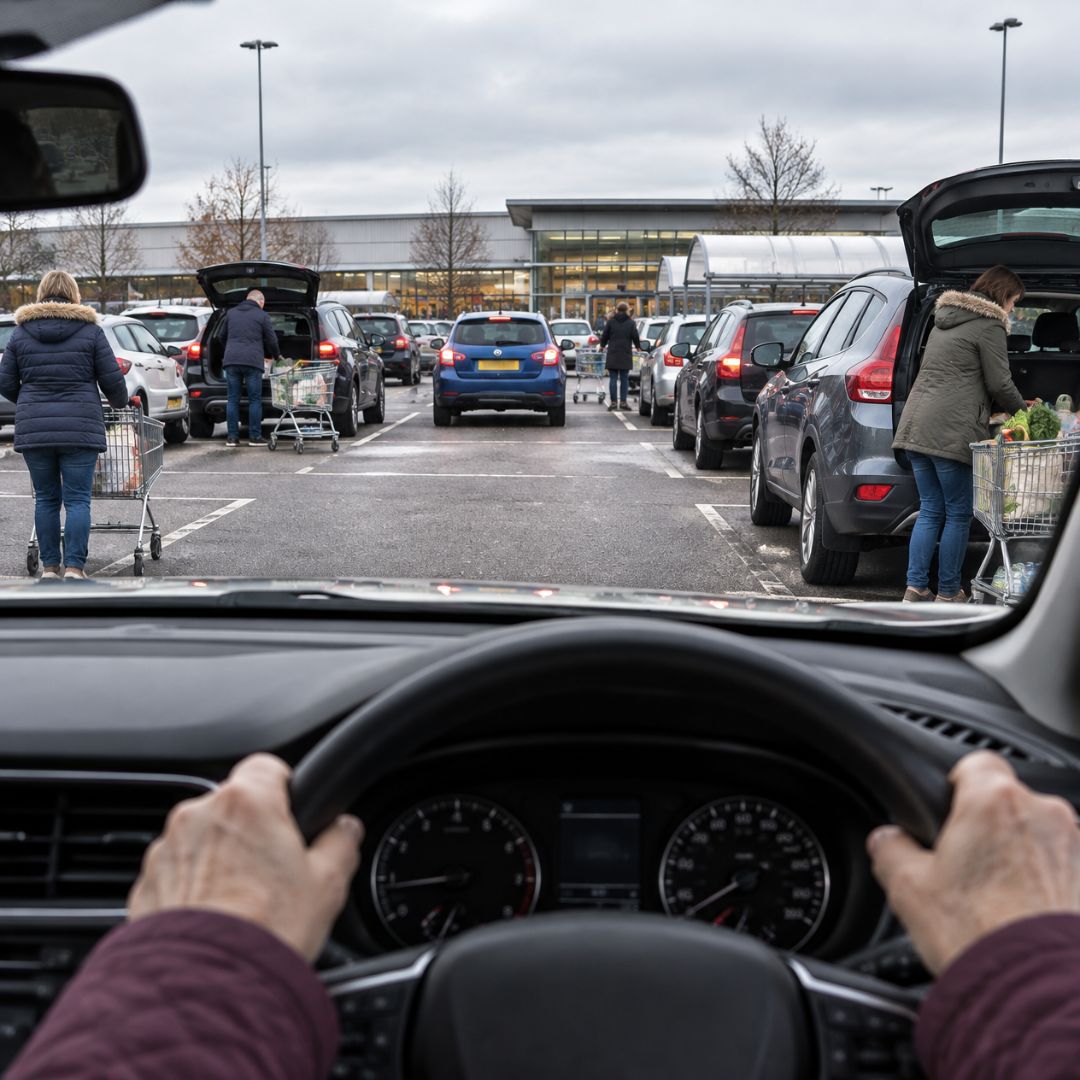
Our client was loading shopping into the boot of their car in a supermarket car park when a vehicle reversed slowly out of the opposite bay and trapped them against their own vehicle. A bystander banged on the driver’s window to make them stop. Without that quick thinking, the outcome could have been fatal.
The driver, aged 82 and wearing carpet slippers, was unaware of the collision.
Thankfully our client did not suffer catastrophic injuries and we were able to secure damages for the harm caused by the driver’s negligence. The driver’s daughter admitted that, because of age and infirmity, the driver should not have been behind the wheel.
What the numbers show
Accidents involving drivers aged 70 or over are increasing. Drivers in this age group now make up 14.8% of full licence holders, up from 10.4% in 2012, and this number will continue to grow. Every driver, whatever their age, owes a duty of care to other road users.
Drivers aged 17 to 24 still face the highest risk of injury, but as the population ages the gap with those aged 70 and over is closing.
Medical studies show that ageing slows reaction times in a driving context. Driving requires large amounts of information to be processed simultaneously and older drivers tend to find this harder than younger ones, which can impact safety on the road.
There is no age limit
People age at different rates and the UK has no set age at which someone must legally stop driving. That leaves families and medical practitioners with difficult decisions. Doctors must judge whether to advise the DVLA that a patient should no longer drive and relatives must decide whether to raise the subject at all.
For many older people, driving is central to living independently and that freedom should not be removed lightly.
But the evidence is hard to ignore. Lawyers and the Insurance industry are seeing increasing numbers of people injured or killed in accidents involving older drivers. As the population ages, I believe we need a more structured approach to the licensing of older drivers. This will not be a popular view. But consider how the family of an elderly driver would feel if that driver’s actions caused death or serious injury to a child, knowing the driver should not have been behind the wheel.
Having the conversation
These conversations are never easy, but it is worth considering the cost of keeping a car. Some organisations estimate that running a car costs around £3,800 a year once you include purchase and depreciation, fuel, insurance, repairs and servicing, tax, parking and cleaning. That money would pay for a lot of taxi fares. Many areas also have community car services and many older people are eligible for a free bus pass.
I have seen first-hand the impact of negligent driving. I would urge older drivers and their families to think honestly about whether it is still safe to keep driving. It is incredibly difficult, but the decision has to be made.
If you are worried about an older relative’s driving, start the conversation now rather than after something has gone wrong. If you are an older driver yourself, ask whether you are still safe behind the wheel.
If you or someone you know has been injured in an accident involving a motor vehicle, our personal injury team is here to listen and advise. Contact Pardoes on 0800 862 0442 or enquiries@pardoes.co.uk to speak to us.
Find out more about our Personal Injury services.
When is someone too old to drive? There is no legal answer in the UK and no set age at which a licence must be handed b...

Pardoes Solicitors is growing, and this is an opportunity to grow with us. We’re a long-established Somerset C...