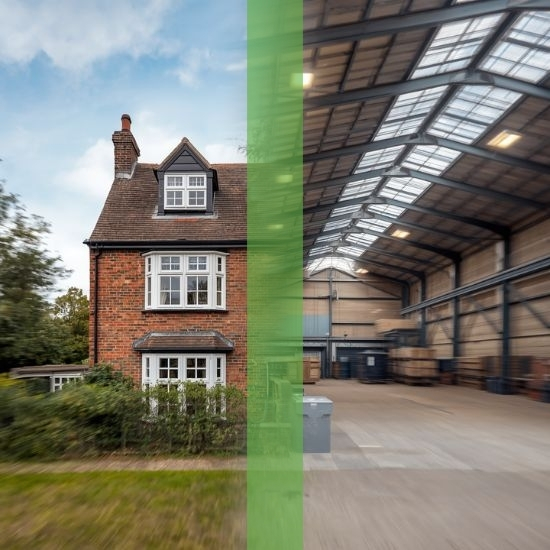
Most people dealing with commercial or agricultural property for the first time expect it to work something like buying a house. Familiar steps, a process they can roughly picture: this is rarely the case.
It is natural that it would seem that way, indeed a smaller price may suggest a simpler transaction than a house purchase. Residential conveyancing is widely understood and most of us have either been through it, or know someone who has.
Commercial property follows a different logic. It is shaped by what you intend to do with the building, who is funding the purchase and what the title documents actually say.
That difference is not always visible at the outset, which is exactly where the problem starts.
The price tag is not a guide to complexity
A small office in Taunton, a workshop on the edge of a Somerset village, a sandwich unit in a market town, a piece of amenity land, a yard or a strip of land that has been used informally for years. None of these appear complicated, the price may feel modest, but legal complexity does not scale with value.
Even a straightforward-looking commercial or agricultural site can involve detailed title investigation, rights of way, access and service media issues, restrictive covenants, planning questions, lender requirements and Land Registry compliance. Those issues do not go away because the asset is inexpensive! In many cases, they are precisely what determines whether the property can actually be used for its intended purpose.
This is particularly true where only part of a title is changing hands. Transfers of part, or leases of part, are rarely clean. They require compliant plans, carefully drafted rights granted and reserved and clear thinking about access, boundaries, maintenance and services. Problems in these areas tend to surface late and, when they do, they delay completion or create registration difficulties that are expensive and time-consuming to unpick.
Use is the central question, not an afterthought
In a residential transaction, the intended use is often more straightforward. In commercial or agricultural property, it is often the first and most important question.
Can the business actually operate from these premises? Does the lease permit it? Are there rights in place for deliveries, waste collection, customer parking? Are there historic restrictions buried in old title documents that nobody has examined closely in decades?
As buildings across Somerset are adapted and repurposed, former agricultural premises becoming workshops, redundant retail units becoming offices, old commercial yards being split and sold, these questions arise with increasing regularity. Informal arrangements that have worked perfectly well for years become critical the moment a sale, a new lease, or a refinance brings proper scrutiny to bear.
Funding changes the picture
Many residential transactions involve lender frameworks that solicitors and clients navigate comfortably. Commercial and agricultural funding is more varied, more individual and often more demanding, even where the deal value is relatively modest.
Lender requirements frequently drive the scope of the whole transaction, including what searches are needed, how the title is reported and what conditions must be satisfied, before funds are released. Pension-led acquisitions add another layer entirely, with rules that catch many buyers off guard when they first encounter them. Terms that looked agreed can start to feel rather less settled once the lender's requirements are properly understood.
Early advice is not a luxury
Commercial and agricultural property has a habit of appearing straightforward at first glance, only for complexity to emerge later. A garage, parking space, small strip of land or former commercial unit may seem simple, but can carry rights or obligations that have been relied on for years without ever being formally documented.
Identifying issues around access, use, rights, title plans or funding at the outset is far more effective than trying to resolve them once terms are agreed and deadlines are approaching.
Even modest transactions can carry real legal risk. The property itself may look unremarkable, but the legal work behind it rarely is. Getting the right advice early helps ensure the transaction works in practice, not just on completion, but long after.
Professional advice
Whether you are buying, selling or leasing commercial or agricultural property, our Commercial Property team at Pardoes advises on transactions of all sizes and complexities. To speak to a member of the team, please call 0800 862 0442 or email enquiries@pardoes.co.uk or visit our Commercial Property pages for more information.

Does my unmarried partner inherit if I die? Not automatically. Under the law of England and Wales an unmarried partn...

Join Our Expert Legal Team at Pardoes Solicitors Are you passionate about delivering expert legal advice and excepti...